

Esej “No tree, it is said, can grow to heaven unless its roots reach down to hell”
Autorka: Sára Novysedláková
This statement is often associated with the alchemy to which Carl Gustav Jung devoted not so little time in his life. But Carl Gustav Jung was a psychologist, so I’m going to write about this quote from a psychology perspective.
The roots of man are invisible, and the idea that we could somehow quantify them makes our heads spin… our beliefs, our experiences, our memories, our expectations, the environment, the family in which we grew up, the people who raised us, but we, too, as we accepted, trusted, or supported ourselves. But what really defines a man are his actions and attitudes at critical moments in his life, in difficult trials, in daily adversity or in breathtaking suffering. The first thing I thought of when I read this statement was an image of a man in a tree. A man who reaches up to heaven with his head or hands, but his feet, in the form of roots, reach down to hell. It’s how it flies high in the clouds and moves around and in the heights that determines how grounded it is and it has its feet firmly on the ground. Let me take this idea further …
My very friend of mine once told me thought: “Depth determines height.” And I see an analogy here. Sometimes I tend to fly into the clouds and dream about something that barely touches the reality of the Earth, but I don’t consider it a threat because I can always go back and anchor myself in the present. But the heights and the skies can also represent our own aspirations, our visions of the future, the expectations, and the demands we place on ourselves. We look at them as a fixed target to which we are wiping and stretching our hands so that we can touch them even for a moment. It’s something that’s pulling us forward, something that’s mobilizing us, giving us direction. The roots in this case may be the real position, the place that we are in and that we stand for. It’s as if it shows the current state that we’ve managed to achieve.
From another perspective, we can say that the sky or heaven can represent all the positive experiences, expectations, memories, but also the attitudes that we have acquired over the course of our lives and that we are putting on a pedestal in the sense that they give us, for example, self-esteem through achievements, or education.
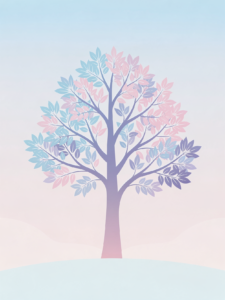
As well as the social support that we received in the early days of our lives, particularly in our families. Trust that we could experience through friendships, when we trusted, but others trusted us. Positive emotions like love, joy, happiness, a sense of fulfilment, satisfaction of our higher needs or a sense of security when we choose to enter a relationship, or a marriage. As well as a sense of responsibility and recognition that we did it when certain demands were placed on us, and we simply had to deal with it. Organize our values and according to them give meaning and direction to our lives. All the bright moments you interpret as positive milestones in your lives, without which our lives would be impoverished.
However, as we are in the waters of Jungian, we must not forget that every darkness includes light, every good includes evil, every pain has joy, every black has a white, just as we have the moon, we also have the sun and, just as we have heaven, we have hell. It follows from this that the content of our lives cannot be just the positive moments and the wonderful moments that we remember all our lives for the simple reason that, if we experienced only those regularly, we would not be able to appreciate them. We wouldn’t appreciate them, because they would be obvious to us, and we would take them for granted. They would lose any meaning for us because we would not know the fact that the moments and moments that we are experiencing can also be negative, exciting, painful, or otherwise unpleasant. And that brings me to the other side, the opposite of positive experiences, and that is negative experiences, memories, expectations, attitudes, emotions, trials, events, or painful wounds.
Of course, even from my own experience, I can say that experiencing negative emotions and, in general, being confronted with inconveniences is not the most pleasant, and you hardly see anything good and good in it. This requires time, space to heal the wound, or at least a gentle coverage of the loss that man has suffered. However, situations that did not turn out as they were supposed to, provide an excellent basis from which we can learn a great deal, exploit, acquire. An example is constructive criticism, through which we can learn from the mistake we have made and avoid it next time. Of course, only when we accept it.
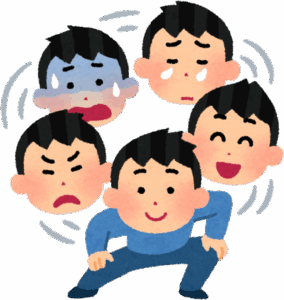
From the standpoint of this philosophy, we cannot definitively say that good is good and evil is evil. I do not think that all the events that occur in our lives can be categorically divided into good and bad, as everything is related to everything. What we consider to be good at some stage in our lives can be shown over time to be just plain evil and vice versa. Or how many times people think they’ve done something good, and in the end, it has a completely different turn of events than they expected. Or, on the contrary, if our wish, which seems to us to be the best one, does not come true, and something even better awaits us. However, we will initially portray it as evil, misfortune, mischance, or other negative attributes.
I therefore return once again to the concept of balance. The fact that we have a solid foundation in the family, whether in the concept of ourselves, is a great indicator of whether we can hold on and manage the high ground. It is equally important that we, in our children or in our professional life, as clients, build such a solid and high-quality foundation. The depth determines the height, the beautiful metaphor that can be seen everywhere we look and through the eyes that can also see what is hidden from many.

Externí autori
- Externí autori#molongui-disabled-link
- Externí autori#molongui-disabled-link
- Externí autori#molongui-disabled-link
- Externí autori#molongui-disabled-link